Showing posts with label birds. Show all posts

Tuesday, 26 November 2019

New Zealand birds

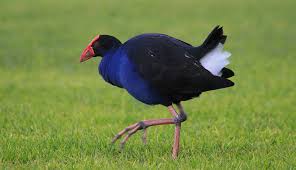
In some ways, bird watching in New Zealand is very easy. The birds are just THERE: the ubiquitous Purple Gallinule, or Purple Swamphen: Image result for purple swamphen nz


Immigrant goldfinches.
Image result for carduelis carduelis

Kingfishers, a few metres away on the edge of the reef.Image result for new zealand kingfisher

A white-faced heron perched on a pohutakawa tree above our heads, unmoving.


A yellow hammer. Pied stilts, in a field on KariKari... Image result for pied stiltAnd, of course, the New Zealand Dotterell.

Thursday, 3 January 2019

Back at Usa


Then, the next day, after a last swim in the pool: time to go back home. Only a scant three hour drive, mostly on tarmac, negotiating Arusha’s busy roads to emerge on the road to Dar-es-Salaam which goes straight through Usa River.

The grounds of Kennedy House International School are like an oasis. Turning off the main road onto a bumpy track, negotiating picky-piccy motorcycles, cars and trucks with inches to spare before driving out of the town. We return on 1st January, Tuesday: so it is still market day. Women sit at the side of the road with piles of tomatoes carefully arranged on sacking mats; tins of beans wait to be bought; bananas, pineapples, potatoes, oranges... a plethora of vegetables.

Some of the shops are shut, including Supafast Internet. But otherwise, it could be any other day in Africa.

We leave the noise behind. The enormous gates slide open and we are once again inside a little oasis. Huge grounds, a full–length circular running track, a 25m swimming pool, silky oaks and fig trees gracing the compound.

Jonny and Adele’s house is a welcome haven: simply yet comfortably built, Adele manages their home with flair. We remember how filtering water was the norm; adjusting to power surges and low water pressure not uncommon.  We unpack from the safari, washing dust and smoke out of clothes and bedding, all the while thankful for safe travel and another exciting adventure.

The swimming pool has been a welcome ‘cooling off’ point. The birds – Wahlberg’s eagles soar over the playing field or perch in the tree by Jonny’s house; a  white-browed coucal and speckled mousebirds swoop across the lawn; black-faced Baglafecht’s weavers fly busily in and out of their nests hanging from the acacia tree; arrow-marked babblers chattering companionably together in the hedge. Fork-tailed drongos call long and loudly in the early morning as I sit on the verandah, feet tucked up on a huge African sofa made of roughly-hewn branches.

We watch the film of The Guernsey Literary and Potato Peel Pie Society: jarring on many levels, not least that none of it was filmed on Guernsey and the scenery, to us, seems false. Yet it gives snippets of understanding the horror of life in Occupied Guernsey during World War 2 and is a delightful story of relationships developed and restored.

I find myself homesick.

It is wonderful to be here. The weather alone – the bright hot African sun, the heaviness of an approaching rainstorm, the violence of the rain itself flooding fiercely down -  this, in itself, if wonderfully reminiscent. I find myself remembering dark skies heralding the rain, a vivid picture of a life formerly lived, singly, in Western Kenya; sunshiny days filled with the delighted laughter of small children; the uniquely evocative, dust-settling smell of huge raindrops  on hot earth. This is worth travelling thousands of miles for.

More so, the time spent with Jonny and Adele, marvelling at how well-settled and adapted they are. Jonny’s ability to instantly establish rapport with the (many) policemen who stop us on the road: their response makes it look as if they are old friends, greetings so friendly that it seems almost abnormal. Where have you come from? Where are you going? Why? What will you do there? Happy New Year! I am again reminded of how important relationship is in Africa.

Adele’s creative gifting in establishing a wonderful little home, mastering the intricacies of shopping with ease and adapting to the challenges of unreliable internet, low – or no – water pressure, intermittent power cuts...

And, both of them, still highly dedicated, extremely hard-working teachers. I wonder if the children they teach and the colleagues they work with know how fortunate they are?


Monday, 3 September 2018

Amazing August

Most of August is, of course, documented on TravelsWithPickle. The whole month passed in a blur of family, friends and fascinating places, yet there were several highlights.

The biggest and best was to be together as a family for the first time since Cat and Andy's wedding in New Zealand two and a half years ago. We had already been looking forward to spending three happy weeks with Jonny and Adele, in the Pyrenees and travelling up to the Dordogne, but Cat and Andy's surprise visit to us in Axat was wonderful. Having left Iraq, en route to returning to New Zealand to await the arrival of their baby (and, in Andy's case, finish his Masters degree), they flew to Barcelona, hired a car and drove across the Pyrenees to meet us.

It was absolutely and undisputably the biggest pleasant shock of my life. (Mostly, shocks are not of the pleasant or kind variety. Another story.) Such a gift of time....

The farewells, though, arrived all too quickly. Jonny and Adele flew back to England from Toulouse; Cat and Andy drove back to Barcelona to catch a flight to Munich, Singapore, Darwin - to visit Andy's brother Jon - and then, eventually, Auckland.

It was quiet. The huge gap caused me a surprising amount of grief, though I tried to temper it, always, always, with gratitude for the gift of time together.

So motorhome life did, eventually, drop back into routine. Pickle was a little quiet, somewhat depressed (until we visited Bel and Richard and family, when she cheered up and had a wonderful time).

I continued, throughout, with nurturing the SCOBY which had miraculously survived extreme heat: the outside temperature, in the shade, was over thirty-eight degrees on one day: SCOBY worked triple time, producing kombucha within 24 hours. It - he - had also grown hugely: I had already separated him from his 'mother' a few weeks earlier, and pulled another 'baby' off the top, keeping both mother and baby separately in a close-fitting bowl in a SCOBY 'hotel'. (Yes, such is the language of kombucha making. Google it and prepare to have your mind blown with complicated instructions.)

We had other adventures with the kombucha manufacture, too. I managed to spill the tea one day, pouring it over the cooker, all over the floor and letting it trickle dangerously near the electrics. Another time, Richard moved the motorhome, not realising that the SCOBY was 'breathing' - i.e., didn't have a plastic lid sitting tightly on his container - and was just resting on the worktop. I came back in to the van to find liquid all over the floor (fortunately not, this time, near any electrics) and a surprised SCOBY sitting on top of said liquid.

Did I mention that kombucha is sweet and sticky?

Other wonderful benefits in August have been that our fitness has improved considerably, although not quite a the peak it was when we were walking uphill in the Pyrenees for up to five hours a day. My arthritic knee has benefited hugely through strengthening my leg muscles.

What else in August? Well, the weather was mostly very hot, apart from the odd cooler (as low as nineteen degrees!!) day towards the end of the month. We enjoyed foraging opportunities: blackberries, of course, but also wild strawberries in the Pyrenees, figs in Haute Garonne, blue plums, and 'Reine Claude' green plums in the Dordogne, early apples in Indre-Loire, wild thyme ...

And always enjoying the birdlife. Little owls at L'Isle sur Tarn; tawny owls at Chaillac; vultures, lammergeiers and eagles in the Pyrenees; buzzards everywhere. Redstarts, mountain chats, stone chats, swifts and swallows and, in the Loire, four magnificent white storks, taking flight from a field next to our cycle track. We even saw ospreys one day... And, of course, green woodpeckers were ubiquitous - the sound of summer in France.

Animals were rarer sightings, but we had glimpses of deer, cycled past a huge hare lolloping by a vineyard, foxes,  And unusual roadkill we spotted included a rat, a snake, and a badger...among, sadly, many hedgehogs.

The month wound down quickly to the end. We returned to Guernsey on 1st September. The summer was over: back to reality...until the next time. Indeed, as Guernsey French has it: a la perchoine! To the next time!

Sunday, 1 July 2018

Jaunty June

This has to be the best month of the year. Spring has exploded into summer, the air is warm and the sun is shining - most days, it seems. Flowers are EVERYWHERE.
Drooping over the patio from our neighbours' garden.

Tree hydrangea


I am amazed at how quickly June is flying  by. The cycle commute to school has changed, as the hedges and banks which, at the beginning of the month were towering over my head, have been cut. It does make cycling down the lanes safer... I can now see vehicles coming, although the tractors which tear round the island are somewhat daunting....

One day, a magpie hopped insouciantly along the bank by my shoulder, so close I could see its wing feathers; a cock pheasant strutted his stuff at the edge of a field, just a couple of metres away from me, quite unconcerned; then, as I took one of my favourite back lanes near home, I saw a buzzard dive down and land at the edge of the field. He hadn't seen me, so I quietly drifted to a halt and climbed the ban to peep over. He flew up, almost in my face, yellow legs dangling as he slowly flapped white-patched wings towards the nearest tree before continuing on across the meadow. mobbed by two crows who pursued him with tremendous determination until he had safely left the area.

Goldfinches swoop busily in and out of the trees and bushes which blackbirds fly low-level across the garden, assiduously digging for worms in the early morning. Thrushes shriek from our neighbour's tree, almost deafening at times. A baby chaffinch rested thankfully on the bird table, its parent perched anxiously above it while it caught its breath.

There was other wildlife, too. Sawfly larvae emerged and started chomping away at the Solomon's Seal, effectively stripping the leaves. Nature's pruning. I started off the season by trying to remove them, before giving up: perhaps they would be food for the birds... but not before the leaves had been stripped to bare stems...


Inbetween bird watching, I teach; read the incredible World War 2 adventure stories the children have written; help them put together a 'museum' of all the incredible work they have done this term; help a group of girls created miniature Guernsey landmarks for our wheelbarrow 'garden'. Our entry this year for the annual schools' gardening wheelbarrow competition is a living 'map' of our island, surrounded by a beaches of bright yellow tagetes and a sea of trailing blue and white lobelia....  Our school 'garden' has now been converted into an outdoor learning area, so no more gardening club for me...

And lastly: Activities' Week. This year, I was fortunate to be with Year 4, 'supervising' them at the beach while they attended Surf School. Apart from a couple of misty, windy mornings, we sat in blazing sunshine, rejoicing over every successful attempt at standing up on the board. It was a blessing, too, to get to know colleagues who normally pass by briefly in the staffroom, as we don't usually work together. My journey down on the bike afforded me wonderful views of the coastline as I navigated the lanes. 30 minutes freewheeling downhill....40 - 50 minutes back up again....
View from the lookout at Le Grantez: site of a former windmill, a Napoleonic era fort and a German defence fortification.


A jack rabbit rests in the shade...


Vazon bay. #tropical

Then, as if I didn't have enough to do, we started making kombucha: fermented tea. Boy, reading the instructions and researching on the internet took hours of my life, but eventually I combined tea, sugar and hot water, letting it cool before gently inserting the mushroom-like 'SCOBY'. Waited a few days, then decanted the sweet fizzy drink. It was actually quite tasty... Now, can we keep it alive and going over the next couple of hot summer months...?
The SCOBY from above. Symbiotic Culture Of Bacteria and Yeast. So there we are.


Thursday, 9 June 2016

Arrived! #settlingin

We woke this morning to the early dawn light pouring in through our bedroom window. This is a new experience - for the last few years we have faced the sunset. Magpies chatter, blackbirds fly low between the shrubs, a wood pigeon coos. Wonderful. This is the first day here at Morningstar.

The last few days at Barnsfield have been packing and cleaning, and we are nearly there. Inbetween, I go to school. Little time for reflection, but one happening on Moving Day will stay in our memories.

Late in the evening the night before, just at dusk, we were in the garden when we found a seagull wandering around. The dog, of course, objected furiously - she hates birds of any size or description, and watches vigilantly through the glass of the front door for avian intruders: after all, if cat burglars are well known, who knows what criminal mischief birds or rabbits might get up to? Robins are tolerated, but blackbirds are seen off with a growl and a bark.  Ducks need to be chased with insouciance. Seagulls and pigeons are annoying. Aeroplanes are scowled at thoughtfully, with a tinge of regret that they are too far distant to take real action.

So there was much Shouting At The Dog, locking her in the house, and the seagull fluttered into the air briefly, then landed again. It staggered, bumping into my bicycle as if it was having difficulty seeing, hopping awkwardly up the rockery, through fuchsia and heather, then disappeared. There was no sign of it the next morning.

Strange.

Then on Moving Day itself, a pigeon landed and proceeded to take a brief bath in the pond among the duckweed and water lilies. Quite unusual, but then it didn't leave. It strutted around the edge of the pond, wandering into the corner of the wall which hosts the compost heap. And stayed. And stayed. It stood there, its eye staring almost unblinkingly at us, showing no signs of wanting to leave.

Oddly enough, after the initial objections, the dog ignored it. A clear sign that something was wrong. After all, pigeons don't usually visit us and this one - a smart blue-grey with bars on its tail (unsurprisingly, it's called a Blue Bar) - showed no signs of leaving. I noticed it was ringed, one blue, one yellow: a racing pigeon, perhaps? So I rang our friend Mick, racing pigeon expert, for advice.

Anxiously watching it to see what it should do, I said, "It's still here."
"Oh, he won't be flying off in a hurry," said Mick.
"Really? How long is it likely to stay?"
"Oh, about ten days."
"TEN DAYS?"
"Yes, and he'll need feeding during that time.  He's too exhausted to fly off anywhere. Tell you what, I'll come round and get him if you like."

I accepted gratefully. Under normal circumstances, I would have rushed out and bought Racing Pigeon Bird Seed, but we were moving house. All the way from the Vale to Torteval - a distance of approximately seven miles, as the pigeon flies. I couldn't leave the pigeon as a weak security guard and it was Too Far to visit frequently enough. (Yes, really. Announcing that I was moving to Torteval was equivalent to saying that I was moving to the other side of the world - New Zealand, even. I'll have to bribe my friends with cake for them to even consider making The Journey.)

Mick came with his little Guernsey Racing Pigeon Club lorry, loaded with wicker pigeon carrier, a ball of string and some bird seed. (I never did work out what the string was for.) Mick crept up to the pigeon, hands spread out at the ready, pouncing on it at the last minute. Held carefully in his hands, the pigeon gazed trustingly up at The Expert, knowing it was now safe.

"Where did it come from?" I asked, expecting the answer to be France, at  least, or perhaps somewhere in the Midlands.
"Let's take a look." Carefully spreading its wing, Mick showed me the red ink label stamped on the feathers. "Oooh, it's came a long way. Maybe even as far as Torteval."  TORTEVAL? The pigeon belonged to The GRPC.   Mick carefully deposited the bird in the carrier and bade me a cheerful farewell.

So, two birds in 24 hours.

Significant: birds have played symbolic roles in our story. Eagles and other birds of prey were constant companions when Richard was gliding in Africa, soaring next to the large 'bird' with curiosity. And there have been significant individual encounters, too. Many years ago - twenty, perhaps - Richard was swimming in a pool at a game lodge in Amboseli National Reserve, Mount Kilimanjaro forming the backdrop, when a pigeon fluttered down and landed on his head. He swam to the side, where it hopped off and walked away, but not before we noticed it had a wound on its breast.

A wounded bird reflected our hearts. At the time, we were going through a period of difficulty and loss.
A bird that didn't seem to see properly reflected our own confusion when we were not sure which direction our lives should take.
An exhausted bird mirrors our tiredness.

"Yet those who hope, wait for and trust in the LORD will gain new strength; They will mount up with wings like eagles..." Isaiah 40:31
And 
"Amazing grace! How sweet the sound, that saved a wretch like me! I once was lost, but now am found; was blind, but now I see..."

How often have we found this to be true. 

Now, a new chapter. Last week before we moved, as I locked up at Morningstar after a day of gardening, I saw a wood pigeon standing, disgruntled, on the empty bird bath. He glared at me as if to say: "Where's the water? Come on, you're supposed to be looking after me."  There are already many birds flying through the shrubbery in this garden here and I sense that they will be morning visitors and will become another part of our story. Already, a robin has come to say hello.

Cat and Andy arrive in a few weeks' time. I wonder if birds will be part of their story too, somehow? Or perhaps something else significant?
Friday, 7 August 2015

Dawn at Rotorua...Dusk at Dotterell point

My heart is steadfast, O God! I will sing and make melody with all my being.
Awake, O harp and lyre! I will awake the dawn!
I WILL give thanks to you, O Lord, among the peoples’ I WILL sing praises to you AMONG THE NATIONS.                                                                                                                                                                Psalm 108


Dawn at Hot Water Beach, Rotorua. Unwittingly, we had chosen a campsite next to the historic Maori village and the lakeside. The dawn over the lake was heralded by black swans and red-billed gulls, with the odd scaup, shag and puheko.

Then off to Dotterell Point, a long spit of land sheltering one of the many little harbours which make up the Bay of Plenty coastline.  Plenty of dotterels – a flock of banded dotterels and several pairs of New Zealand dotterel.

And, apparently, the Variable Oystercatcher – which has seemed ubiquitous to us as we have journeyed down North Island’s east coast – is a rare species....

An added bonus: we’d been here just a few minutes when a young seal lolloped painfully across the grass in front of us. He kept stopping, lifting his head, before dragging himself into the dunes.  He looked thin...


....but we were pleased to see that he had taken himself off by the next morning. Another beach walk, sand stretching further than the eye could see...another sunrise...surfers already out at the break, having walked across the shallow estuary at low tide, then out on the sandbanks.

After days of intermittent rain, the sun shone brightly in a clear sky, glinting on the puddles. A Caspian Tern (taranui, an uncommon native gull – though found frequently along the east coast) flew in to the end of the spit. It seemed as if everything breathed a sigh of relief after the windy wet storms...


Friday, 31 July 2015

Anzac Bay to Tauranga to Mount Manganui...

An early morning cycle ride along the edge of the estuary was a joy. We thought we’d come to an ordinary little seaside resort: and, on one level, we had. We cycled past holiday homes, empty for the winter, although our little camping spot at the end of the spit began to fill up rapidly with motorhomes, coming in for the weekend. 

But it was the birds which delighted: every tree had a tui singing its heart out. My mild obsession with variable oystercatchers is nothing compared to my need to stop and listen to every tui I hear, searching for it among the thick foliage. The song – trills, chatters, bells, whistles and croaks – is just a delight.  Among the seedling mangroves at the water’s edge we would see a handful of kingfishers together; white-faced herons stately in the water; and a pied shag, a ‘locally common native’. Lovely.

And a coffee stop on the way home; sign in the cafe: Unattended children will be given espresso and a kitten to take home.

A slow and leisurely drive then, to Tauranga.  (Toe-wronger!). Every trip in this camper van is slow and leisurely – there is no other way of driving it. At least, not one that wouldn’t have me screaming and grabbing on for safety. No cowboy driving here.

Toured Tauranga a little, looking for our meeting place with Cat for tomorrow. Wedding dress shopping! An appointment at a bridal boutique, but we’ll see...Then a large campsite at Mount Maunganui.  Electricity and more neighbours than we are used to, but still a wonderful view of the sea – the Bay of Plenty.

Straight out of the van and on our way up the Mount.  A mere 285 metres, climbing up via steps and a somewhat circular 4WD track. I was VERY grateful that I have been doing more and more walking. No problem with the knee!! Thank you God! Thank you walking poles! Thank you walking practice!

And amazing views from the top...


Back down, there was nothing else to do but visit the Hot Pools next door to the campsite.  (We even got a discount for being campsite members...) Steaming hot salt water open-air baths – powerful jets massaging aching muscles, a relaxed clientele of families and people (men AND women) with more tattoos than we have ever seen in one place: we don’t get out much. Wonderful.